
1. Understanding Sensory Bins: The Montessori Approach
Sensory bins are powerful educational tools for young children, rooted in the philosophy of Maria Montessori, the renowned early 20th-century Italian educator. These bins revolutionized early learning by prioritizing sensory exploration—a fundamental aspect of child development.asclepiushealthjournal+1
What Are Sensory Bins?
Sensory bins (also known as sensory trays or Montessori trays) are containers designed to stimulate a child’s senses. They are filled with an array of objects, materials, and textures centered around a specific theme or concept. The primary goal is to encourage autonomous sensory exploration, allowing children to use their hands, eyes, nose, and ears to discover their environment.
Contents can range from seeds, beads, and textured fabrics to animal figurines, raised letters, or numbers. By interacting with these items, children deepen their sensory understanding of the concepts presented.
Origins in Montessori Pedagogy
Maria Montessori observed that children learn best through hands-on sensory experiences. She developed these activities to help children build intelligence through direct interaction with their environment. Sensory bins empower children to explore independently, boosting their creativity, self-reliance, and confidence.
2. The Science Behind the Fun: Developmental Benefits
Recent research underscores why sensory play is more than just a game—it’s a critical component of healthy brain development.pmc.ncbi.nlm.nih+1
-
Neural Pathways: Sensory play strengthens the neural connections in a child’s brain, which are essential for complex learning tasks later in life.[asclepiushealthjournal]
-
Cognitive Growth: Studies show that multisensory input (like touching and seeing an object) accelerates word learning and concept retention.onlinelibrary.wiley+1
-
Emotional Regulation: Sensory activities, particularly those with soothing textures like sand or water, help children manage stress and regulate their emotions, a key factor in behavioral health.[scielo]
3. Why Create a Sensory Bin?
Building a sensory bin offers numerous specific benefits:
-
Sensory Stimulation: Engages the five senses (sight, sound, touch, smell, and sometimes taste), crucial for early development.[asclepiushealthjournal]
-
Fine Motor Skills: Manipulation of small objects (pinching, pouring, scooping) improves hand-eye coordination and dexterity, preparing children for tasks like writing.[asclepiushealthjournal]
-
Cognitive Development: Introduces concepts like quantity, texture, shape, and color, stimulating reasoning and inquiry.[bio-conferences]
-
Imagination & Creativity: Provides an open-ended stage for storytelling and role-playing.
-
Autonomy & Self-Esteem: Encourages independent discovery, reinforcing a child’s belief in their own capabilities.[pmc.ncbi.nlm.nih]
-
Stress Reduction: The tactile nature of sensory play can be incredibly soothing, helping regulate emotions.[pmc.ncbi.nlm.nih]
-
Social Interaction: Promotes sharing and communication during group play.
- Adaptability: Easily tailored to any age, interest, or setting (home, school, therapy).[mdpi]
4. Safety First: Essential Guidelines for Parents
Before diving in, ensuring your child’s safety is paramount.
-
Choking Hazards: For children under 3 years old (or those who still put things in their mouths), avoid small items like marbles, coins, or dry beans. The Rule of Thumb: If it fits through a toilet paper roll, it’s a choking hazard.
-
Edible Options: For toddlers, use « taste-safe » bases like crushed cereal, cooked pasta, or edible sand (blended crackers) instead of shaving cream or raw flour.
-
Allergies: Be mindful of potential allergens like wheat (in playdough) or nuts if you are using natural materials.
-
Supervision: Always supervise sensory play. It fosters safety and allows you to observe their learning process.
5. How to Create a Sensory Bin: From Idea to Reality
Designing a custom sensory bin is a rewarding process requiring just a bit of planning.
1. Identify Age & Needs
Tailor the bin to the child’s developmental stage. Toddlers need larger, safer materials, while preschoolers can handle complex sorting tasks.
2. Choose a Theme
Base the theme on the child’s interests to maximize engagement. Whether they love animals, space, or specific colors, a relevant theme will capture their imagination.
3. Gather Materials
-
Container: A clear plastic storage bin (shallow and wide is best), a wooden tray, or even a large cardboard box.
-
Sensory Base: Rice, sand, water beads, dried pasta, shredded paper, kinetic sand, or fabric scraps.
-
Themed Items: Figurines, letters, natural elements (pinecones, rocks), or toys matching your chosen theme.
-
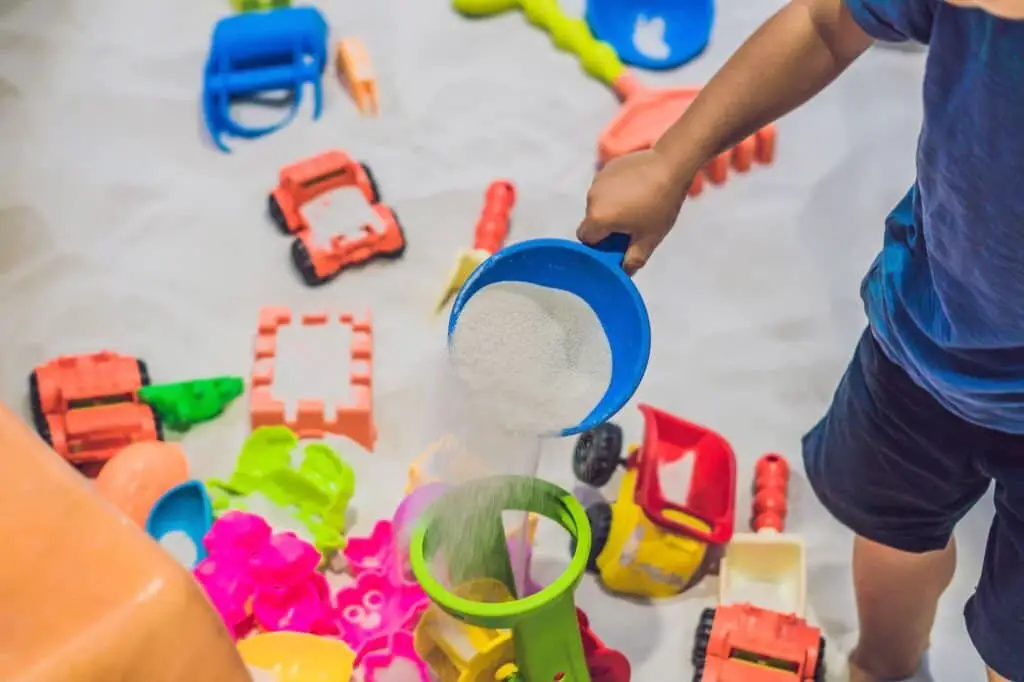
Tools: Spoons, scoops, tongs, funnels, cups, and magnifying glasses for manipulation.
4. Assemble & Invite
Arrange the items invitingly. Ensure the contents are visible and accessible to encourage immediate exploration.
5. Encourage Autonomy
Step back and let the child lead. Allow them to touch, pour, sort, and discover at their own pace.
6. Supervise & Engage
While independence is key, your presence is helpful for safety and guidance. Ask open-ended questions like « How does that feel? » or « What sound does that make? » to deepen their experience.
7. Rotate & Reuse
Keep the interest alive by swapping out materials or themes periodically. Store bases in airtight containers to reuse them later.
6. DIY Recipes: Make Your Own Sensory Bases
Save money and customize your bins with these easy recipes!
🌈 Rainbow Rice
-
Ingredients: 1 cup uncooked white rice, 1 tsp white vinegar, food coloring.
-
Instructions: Mix rice, vinegar, and a few drops of dye in a ziplock bag. Shake well until coated. Spread on a tray to dry for an hour. Repeat for other colors!
☁️ Moon Sand
-
Ingredients: 8 cups all-purpose flour, 1 cup baby oil (or vegetable oil for a taste-safe version).
-
Instructions: Mix well until it holds its shape when squeezed but crumbles easily. Perfect for molding!
🍝 Rainbow Spaghetti
-
Ingredients: Cooked spaghetti, oil, food coloring.
-
Instructions: Divide cooked pasta into bags. Add a drop of oil and food coloring to each. Shake, let sit for 10 mins, then rinse with cold water to set the color.
7. Creative Sensory Bin Theme Ideas
Spark your child’s imagination with these engaging themes:
-
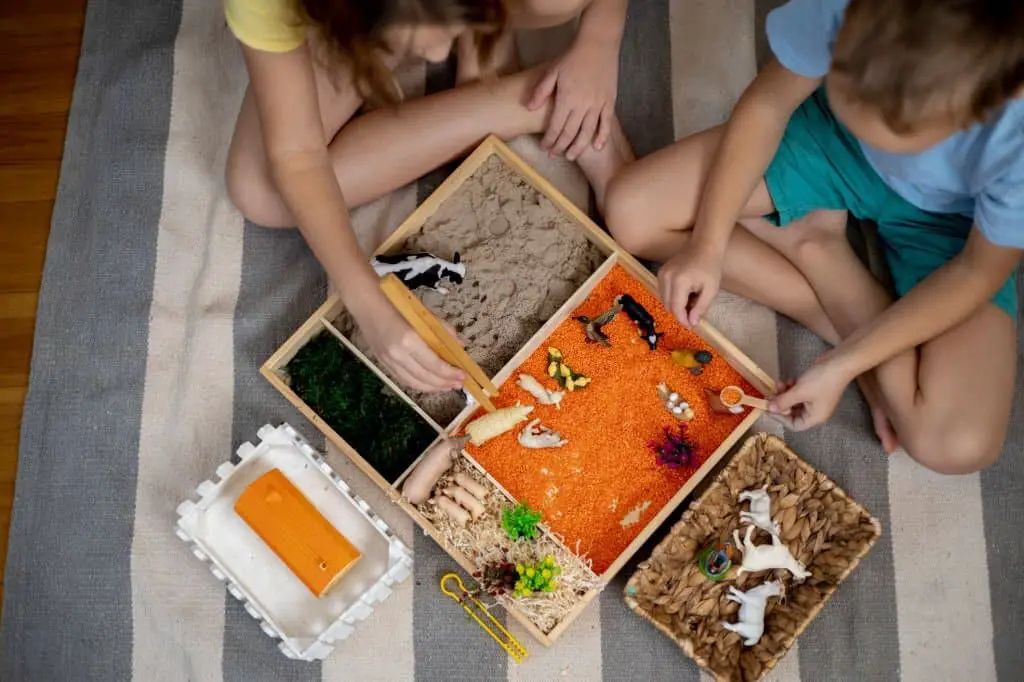
Animals: Habitats like the jungle, savanna, farm, or forest.[medwinpublishers]
-
Space: Black beans or dyed rice base with stars, planets, moon rocks, and « galaxy » dust.
-
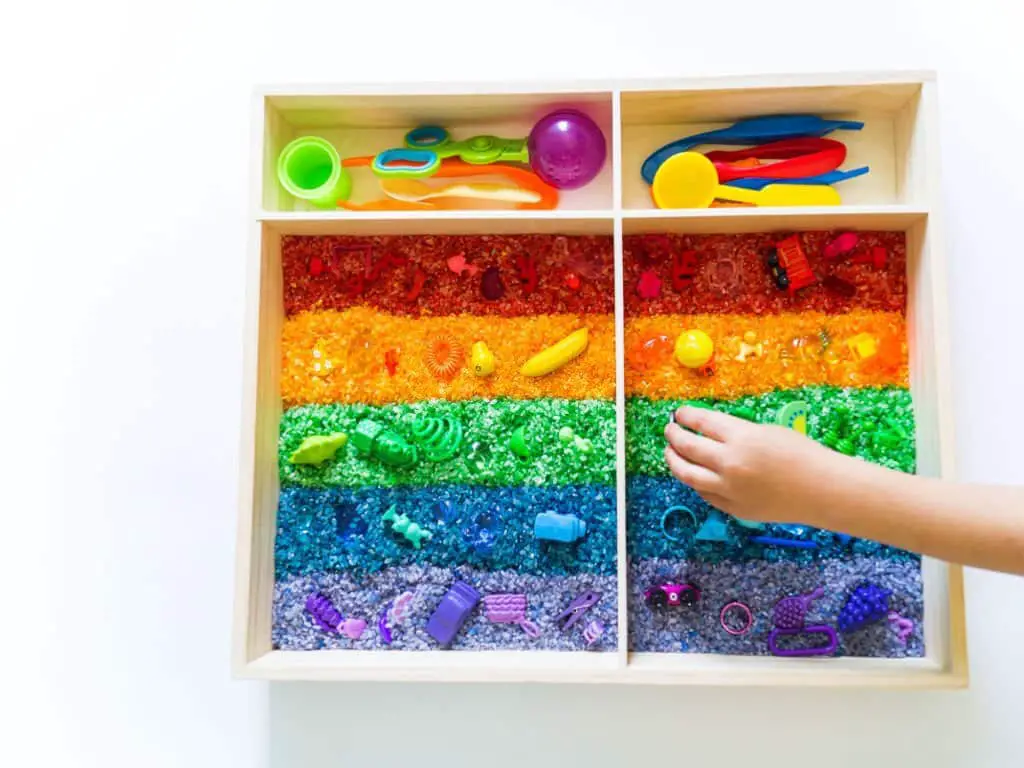
Colors: Monochrome bins (all red, all blue) or rainbow mixes for sorting.
-
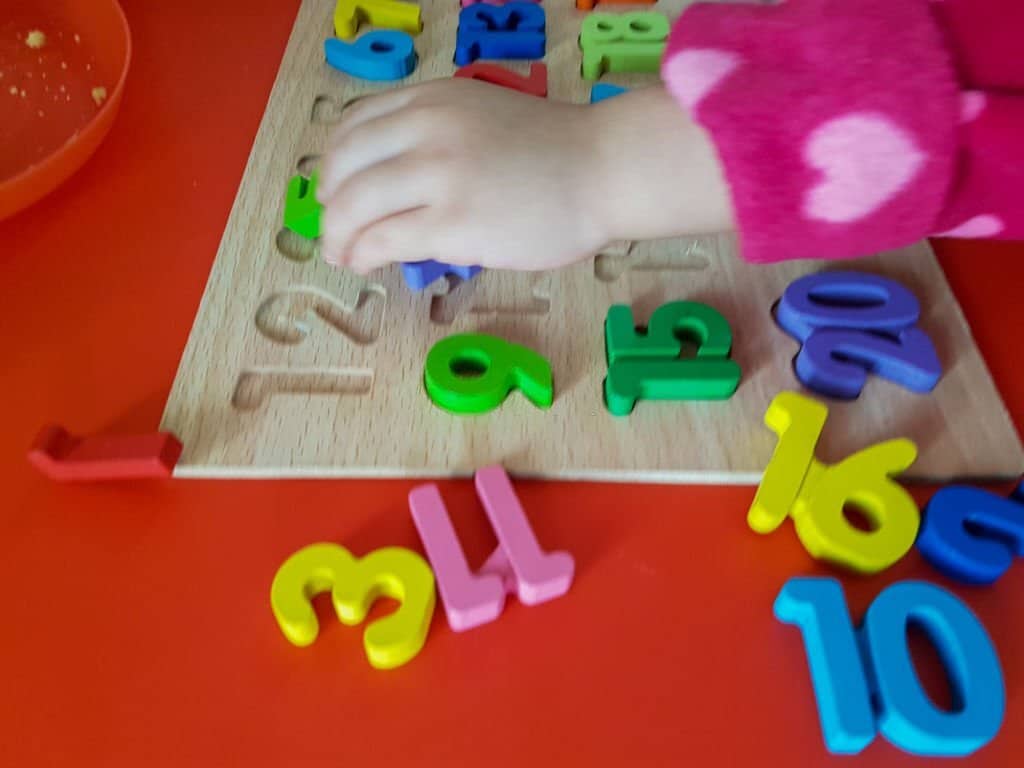
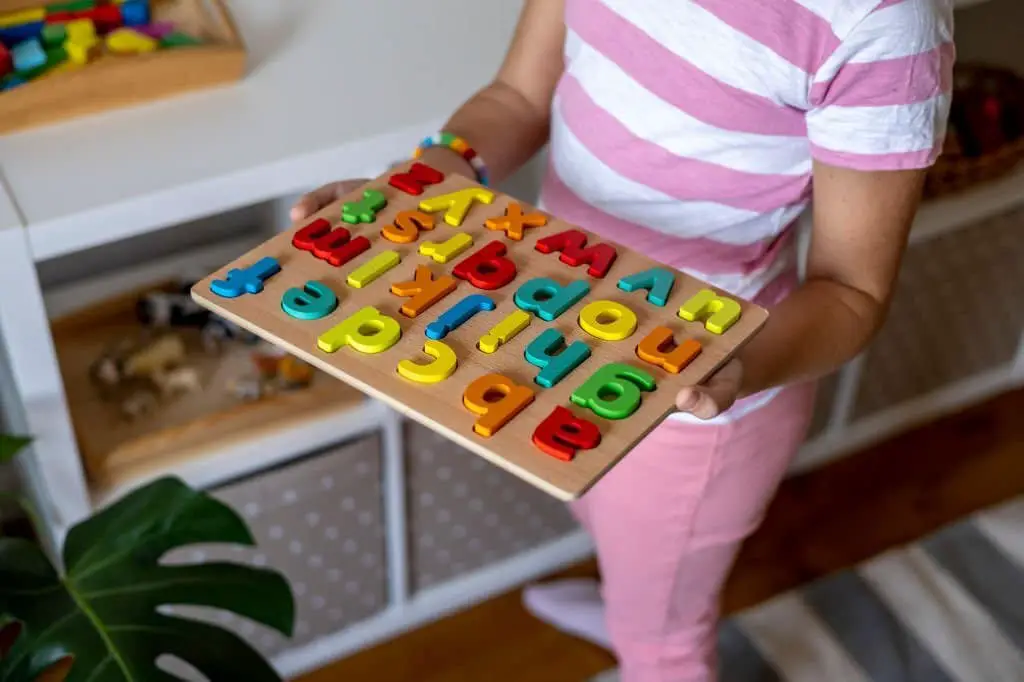
Numbers & Letters: Hide magnetic letters or numbers in sand for a « treasure hunt. »
-
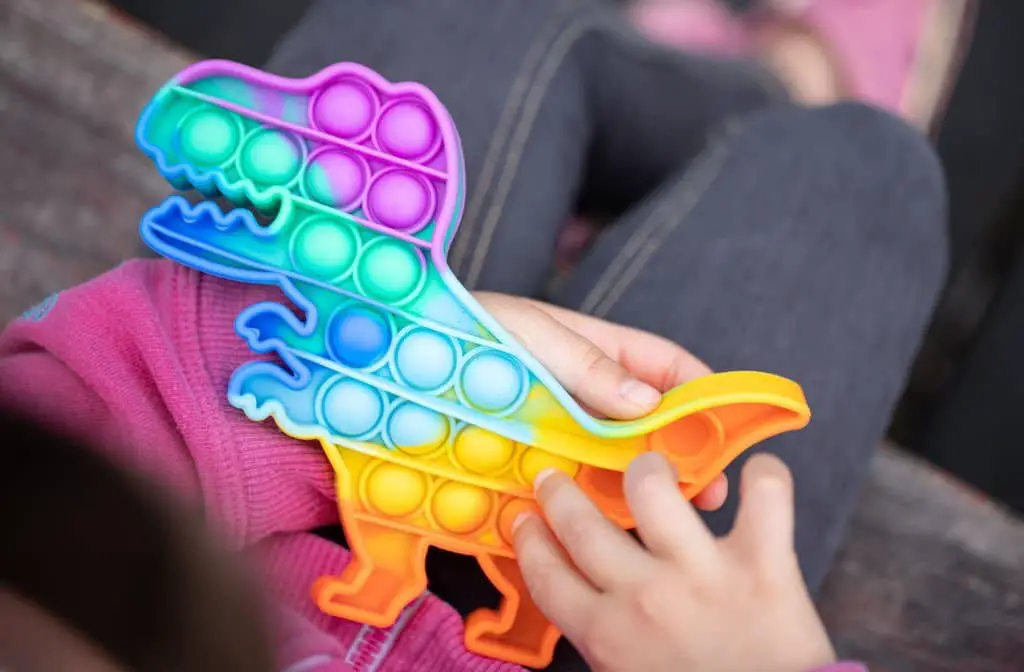
Dinosaurs: Prehistoric scenes with fossils, rocks, « mud » (chocolate pudding or brown playdough), and brushes.
-
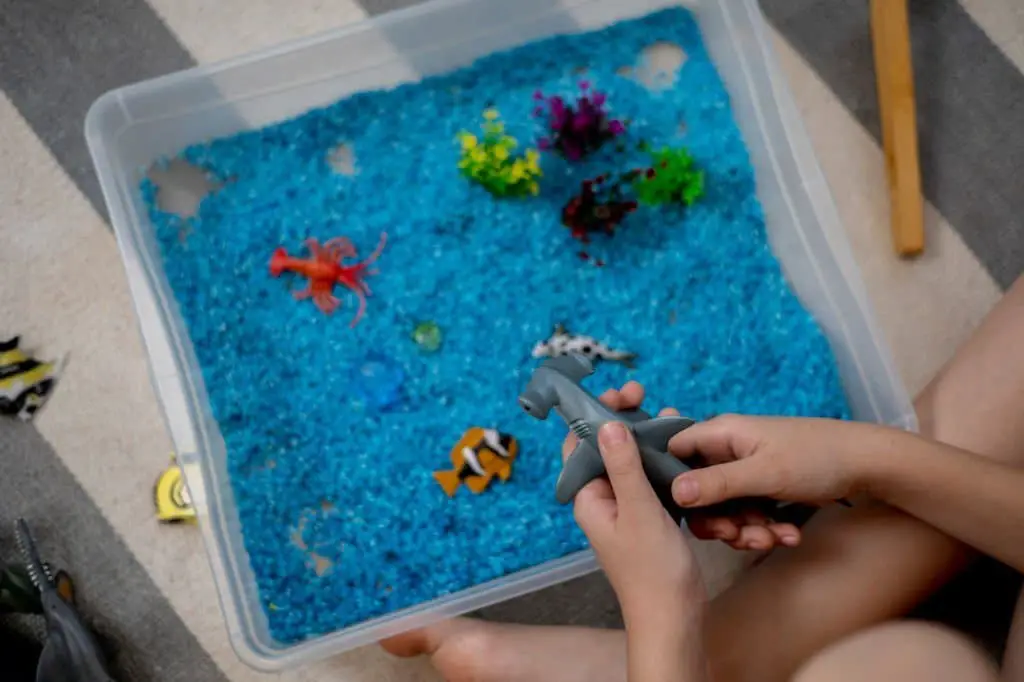
Ocean: Blue water or gelatin, sand, seashells, and marine life figurines.
-
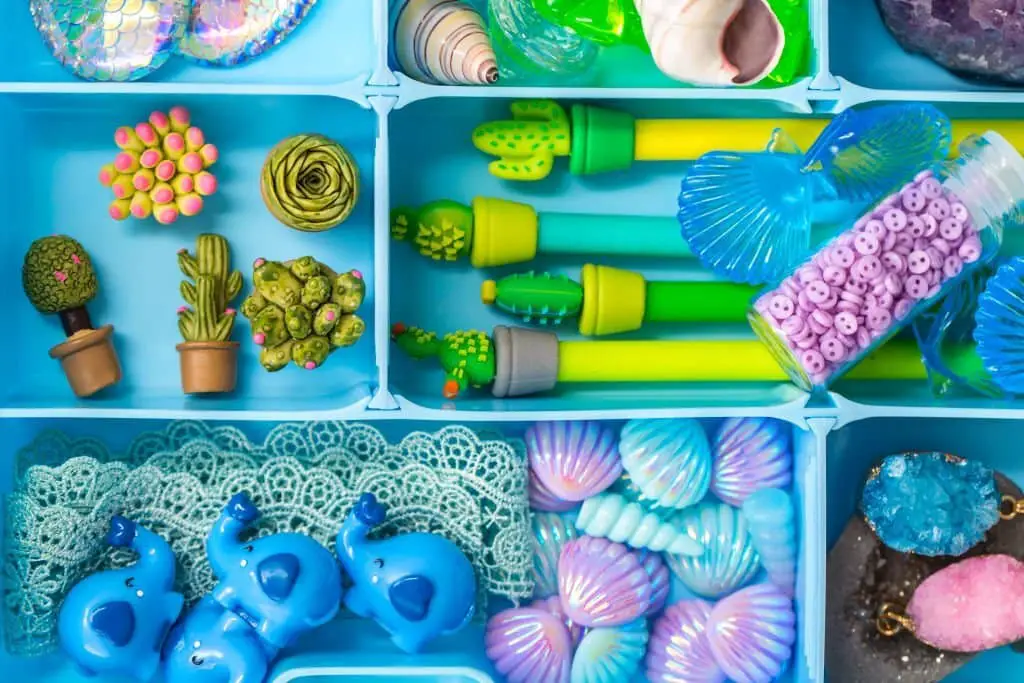
Gardening: Potting soil (or crushed Oreo « dirt »), seeds, pots, and miniature tools.[mdpi]
-
Insects: Faux bugs, leaves, twigs, and magnifying glasses for a « bug hunt. »
-
Construction: Gravel (dried black beans), trucks, blocks, and « blueprints. »
-
Fairy Tales: Castles, figurines, gems, and magical dust (glitter).
-
Nature: Pinecones, stones, leaves, and seasonal treasures gathered from a walk.[mdpi]
8. Troubleshooting: Common Challenges & Solutions
-
« It’s too messy! »
-
Solution: Place a large sheet, shower curtain, or towel under the bin. Set rules: « The sensory material stays in the bin. » Start with « dry » bins (blocks, fabric) before moving to « wet » or messy ones (water, sand).
-
-
« My child eats everything. »
-
Solution: Stick strictly to edible bins. Use crushed cheerios for « sand, » water for « ocean, » or yogurt paint.
-
-
« They got bored quickly. »
-
Solution: Add a new tool! Often, just adding a funnel, a whisk, or a pair of tongs can reignite interest in the same material. Or, hide a « surprise » at the bottom for them to find.
-